What do a German course in Berlin, Spanish course in Santander, Italian course in Florence and French course in Paris all have in common? They all give you the best chance of improving your language skills quickly through an immersive experience!
Immersion means being surrounded by the language, both inside your classroom (native teachers, students speaking a single common language, information on the notice boards, etc.) and outside the classroom (ordering drinks at cafes, making small talk at the market, reading bus timetables, listening to audioguides, etc.).
When it comes to keeping up the learning momentum outside your language school, we’ve put together a few of the best things to do to practise your core language skills. We’ve designed a little key for you to see which areas you’ll be improving in at a glance as well as any bonus skills the activity has to offer. We’re using ACCORD Paris, our partner French language school in the City of Lights, as a guide, but all of these activities can be transposed to whichever city you’re studying in.
Improving your language skills through an immersive experience
Here’s the key to follow with skills ranked from left to right in order of how much practice each activity will give you:
🗣️= Speaking
👓= Reading
🎧= Listening
Now picture the scene… you’ve just finished your French class at ACCORD Paris for the day, you’ve met up with your fellow students and it’s time to soak up the Parisian lifestyle. What’s first?
Lunch
🎧🗣️👓
If you’ve spent the morning at one of ACCORD’s General French lessons, then you’ll certainly have worked up an appetite. You’re in central Paris, so you’re spoilt for choice when it comes to where to go. Pop down to one of the many boulangeries in the local area to grab a stacked baguette or a slice of quiche for lunch on the go. Some of the little descriptions in the display cases can be a bit short and vague, so don’t be afraid to ask the staff behind the counter “Qu’est-ce qu’il y a dedans, s’il vous plait?”. Listen to the conversation around you to hear if anyone is recommending or advising against anything in the vitrine and read the information carefully if you have any food intolerances or allergies.
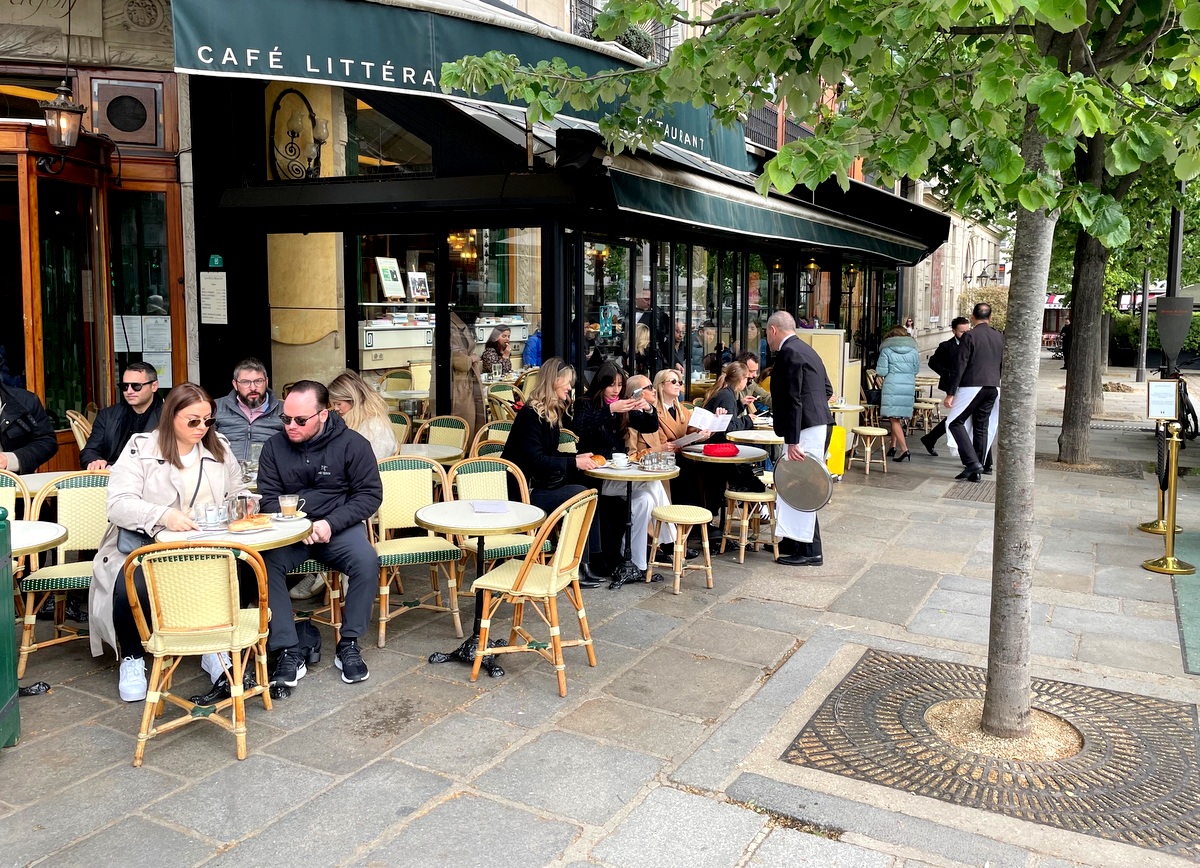
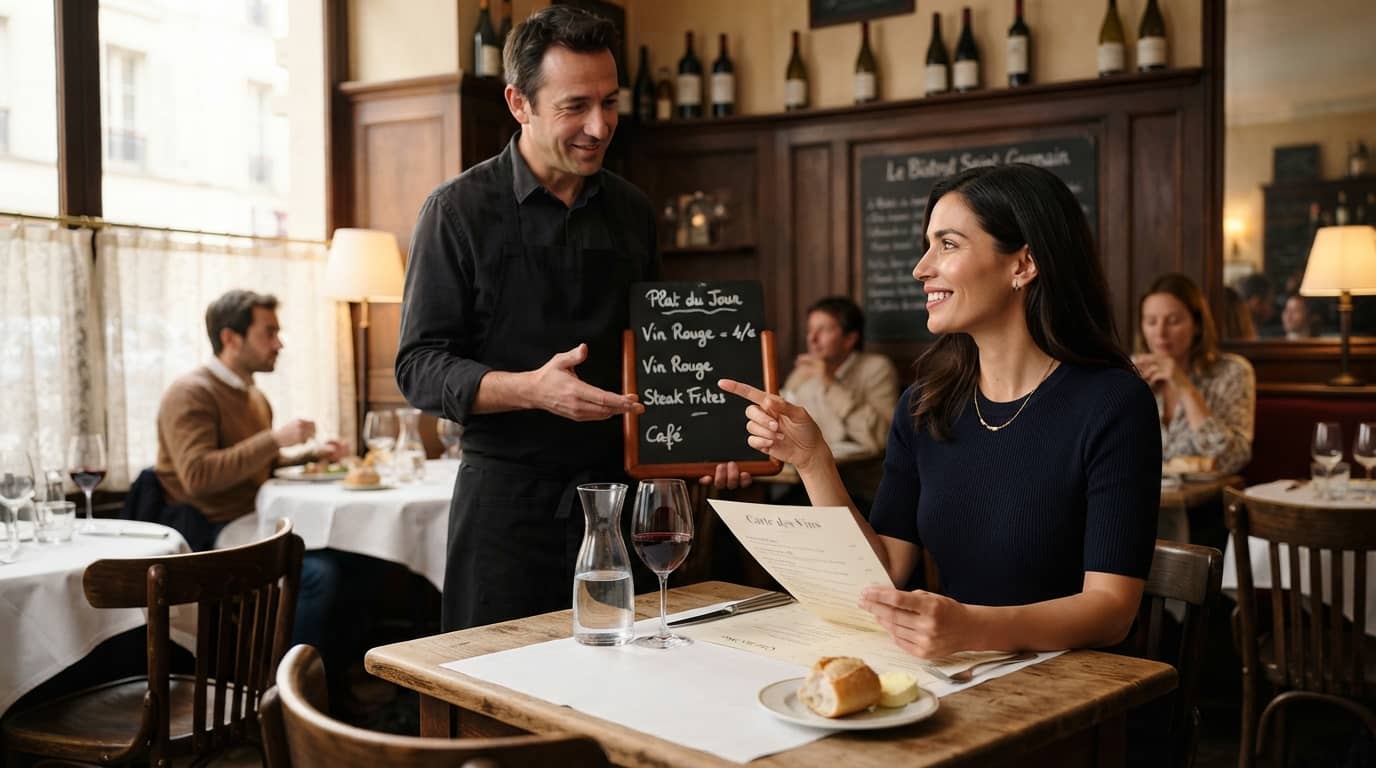
If you’d prefer a sit-down lunch, pick your favourite restaurant (we have lots of tips about how to find a good one in Paris here) and ask for a table. Read the menu and the blackboard, listen to the people around you chat about their lives and lunches, ask your waiter or waitress for their recommendations. If you’re in a restaurant like Bouillon Chartier where communal tables are the norm, be brave and strike up conversation with your fellow diners. Lunchtime is a golden opportunity to put your language skills to the test, especially your listening skills. So, prick your ears up and feed your great matter!
Museum
👓 🎧 🗣️
No trip to Paris would be complete without visiting a museum or two. As you can imagine, there are lots to choose from with something for everyone. There are lots of ways to practise your language skills at the museum, such as booking your place on a workshop. Lots of museums host workshops or classes during the afternoons, providing a great way to practise your listening skills and even your speaking if there’s any interaction with the activity leader and the group. For example, the Petit Palais has a lovely drawing workshop on Tuesday afternoons where an artist guides you through different techniques and materials to draw or paint the piece in front of you.
Pick up an audioguide and switch the language to French (of course!). Who better than Charlotte Gainsbourg to introduce you to the legend that is Serge Gainsbourg, attuning your ear to Parisian pronunciation and the rhythm of the French language itself at the Maison Serge Gainsbourg? And of course, read everything: the cartels, the booklets, the artist biographies, the exhibition catalogues, etc. They are a mine of information when it comes to giving you new vocabulary and introducing you to a more formal register than you may have encountered whilst out and about in Paris.
Bonus skill: 💡Knowledge. You’re not just broadening your language skills whilst visiting a museum, you’re also broadening your mind!
Market
🗣️ 🎧 👓
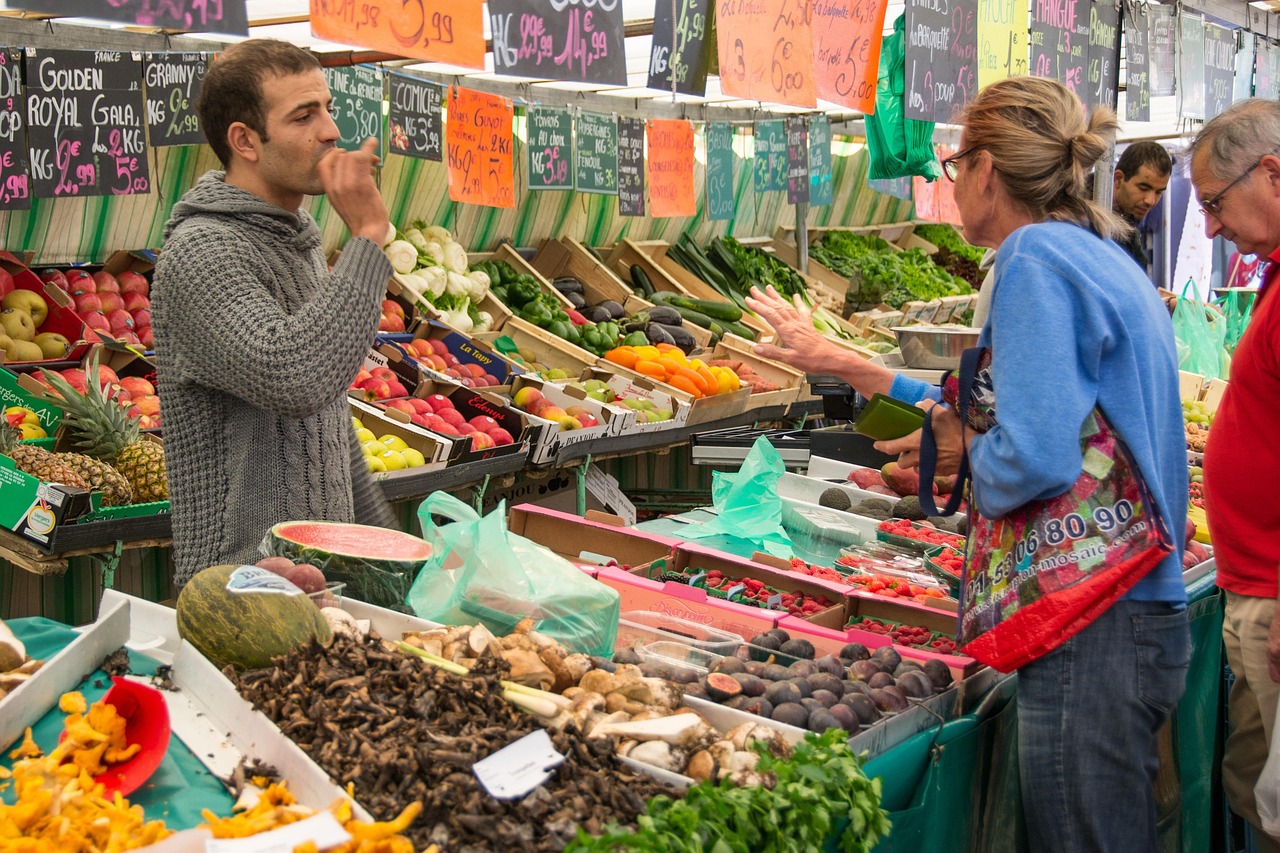
When you go to a foreign country, it can be easy to go to the nearest supermarket to do your shopping and use the self-checkout to avoid any surprise questions about loyalty cards or adding a donation to your total spend. You’ve made the first move and come to an overseas country to learn the language; make the next move out of your comfort zone and do your shopping at the market. Visit the cheese stall, tell them what you want to make and listen to them share their recipes and tips for how best to cook it. Read the information at the stands about whether you can pick up the fruit and vegetables yourself or if you have to wait for the vendor to serve you. Go and see the person giving out saucisson samples, thank them for your little taster and ask for more information about it: how it’s made, what breed of pig, where it comes from, what to serve it with, etc.
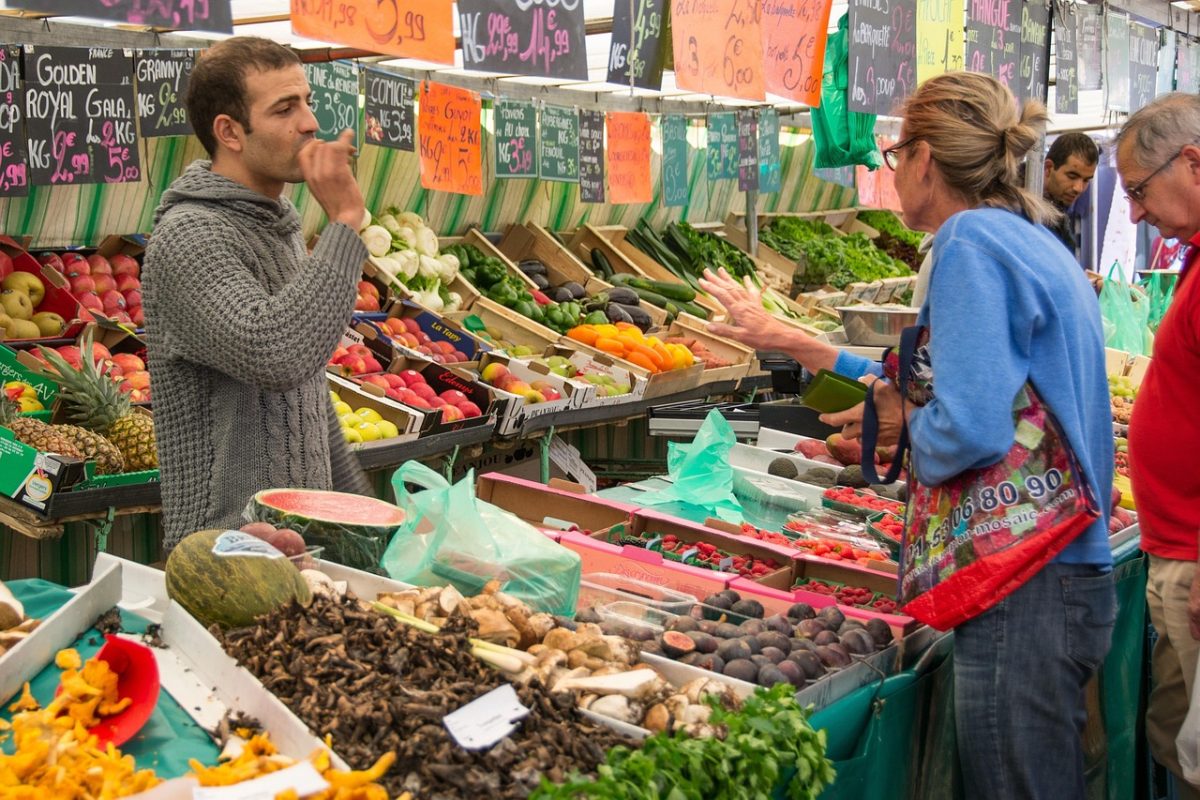
Markets are also a meeting place for locals, giving you every opportunity to communicate with residents and experience a real slice of life in Paris. The nearest market to ACCORD Paris is on Boulevard de Grenelle, which is ideal if you don’t have class on a Wednesday morning. Otherwise there are lots of markets in every arrondissement in the capital, you just have to check the opening times and avoid getting there too late as many traders will have already packed up.
Bonus skill: 🪩Confidence. If you can make it at the market, you can make it anywhere!
Escape game
🗣️ 🎧 👓
This is a great activity for you to do with your fellow students after class or in the evening. Teams tend to have 1 hour to crack codes, open locks, and escape the room or finish a specific objective in rooms with immersive storylines like a wizard’s lair, a haunted house or a crime scene. What makes this such a fantastic activity when it comes to practising your language skills is that it’s all about communication: players have to work together and pool their skills to solve the puzzles. You have to speak to each other, listen to each other, listen to the game master if you need a hint, read the clues carefully and explain your reasoning coherently if you want to get out in time.
There are lots of escape rooms and urban scavenger hunts for you to choose from with prices that work on a sliding scale (the bigger the team, the cheaper per person). Just make sure you book an escape room in French and not English, have fun and get out before your time runs out…
Bonus skill: 🧩Problem-solving. A skill that’s hard enough in your own language, never mind in another!
Workshop
🎧 🗣️
Every country and city has its own USP. People go to Rome for its ancient heritage and cuisine, Berlin for its history and trendy hotspots, Seville for its flamenco… and Paris for its gastronomy and artistic side. ACCORD Paris is taking care of the French language side of the city for you, so why don’t you use your time in Paris to explore what else the French capital has to offer and tap into its signature trades. We recommend you visit Get Your Guide either online or in person at their offices on Avenue de Suffren (down the road from the school) and take your pick from the many activities they have on offer.
You can make macarons with a professional baker, get an insight into the art of wine tasting with a sommelier, set up an easel and paint the Eiffel Tower with an artist as your guide, craft your own chocolate concoction with an artisan chocolatier, make your own perfume at Molinard Parfums, etc. The main thing here is that you get to practise both your listening skills and your speaking skills with people outside the school. You have to follow their instructions, understand what they are telling you to do or not do, ask for assistance when you need it, explain what you’re trying to achieve and make small talk with both your teacher and your fellow participants, no matter where in the world they come from. On top of nailing the art of making croissants, you go home with an extra string to your bow and a souvenir you’ve made yourself.
Bonus skill: 🧑🍳🧑🎨🍷🧀🍫 etc, etc, etc, etc!
Host family
🎧 🗣️
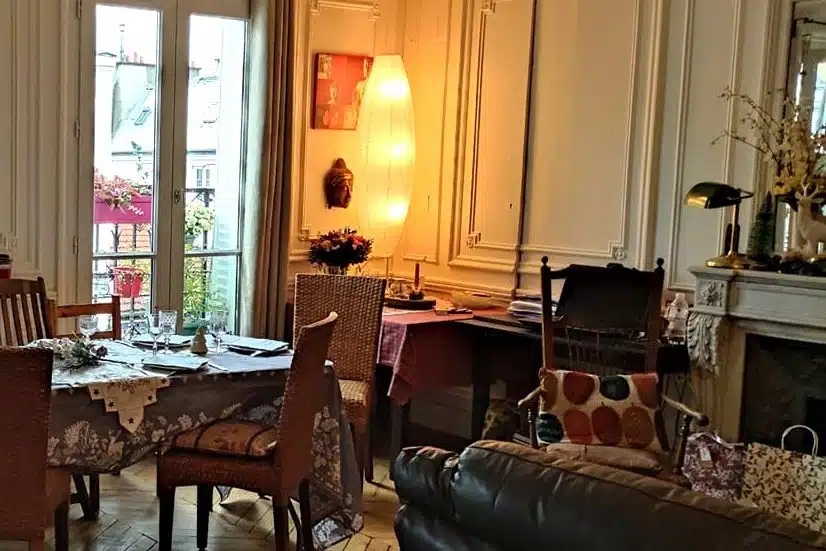
No rest for the wicked! Once you get back home from your busy day communicating in French, you have your lovely host family to chat to as well. Booking a homestay for your study abroad experience is a no-brainer as it not only includes bed & board, but it also gives you a golden opportunity to practise French with people who will feel comfortable to correct your pronunciation or teach you new words to add to your vocabulary (the guy at the coffee shop is lovely, but he’s not going to tell you that you’re pronouncing “viennoiserie” wrong!). It provides you as a learner with a “safe space” to practise everything you’ve learnt in class and share everything you’ve learnt after class as you’ve gone about your day in Paris.
Communicating in another language is harder after a long day, as your brain naturally wants to switch back to your native language to give it a break, but putting the extra effort in to stay alert and listen to the interaction between your hosts and how their days have been will only make you stronger and more resilient in your second language. So squeeze every last drop out of your French practice right before you go to bed, as it helps your brain move new facts from short-term memory into long-term storage whilst you sleep and makes those neural connections even stronger.
There you have it, no matter where in the world you decide to study a language, the world is your oyster when it comes to practising your second language outside the classroom. If you’d like to book your study abroad experience or would like advice about how to get the most out of your time overseas, contact us on info@activelanguages.co.uk for further information.