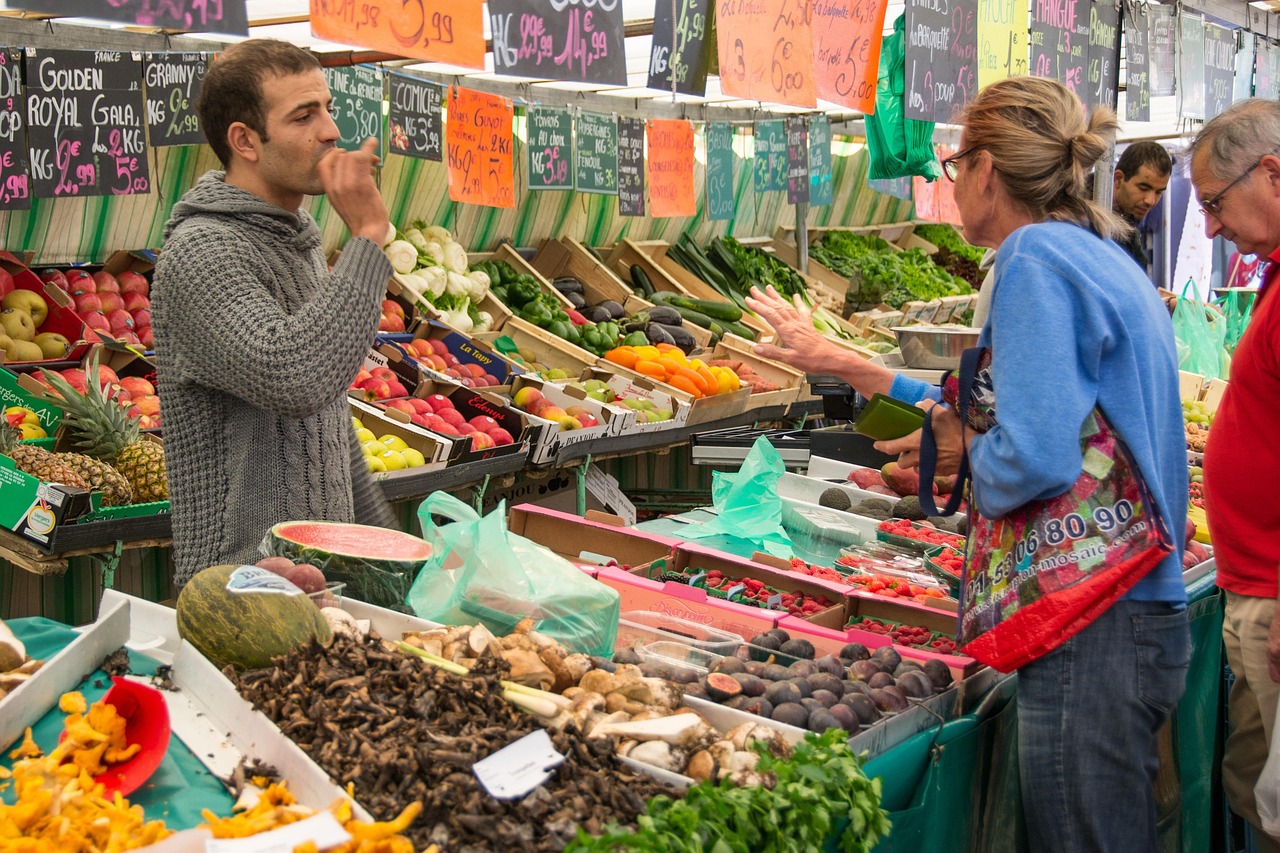
The staggering growth of Duolingo is testament to our love for languages and learning new skills. That being said, users cite a focus on streaks and leaderboards over actual language teaching, monotonous lessons, a lack of explicit grammar explanations and irrelevant exercises (“spiders often sit on their beds and cry” may be memorable, but it isn’t something you’re going to say when making chit-chat with the cheesemonger at the market).
So, what’s the best way to learn a language?
Let’s join our very own Héloïse to learn from her experience in both French and Italian.
French – Work Experience
As part of my Master’s degree in French and Italian, I had to complete a year abroad during my third year and work as an English teaching assistant at a French lycée. I arrived in the Pas de Calais region as it was known then (now it’s called the Hauts-de-France) with a good amount of French under my belt. My mother is French, so we’ve certainly had our fair share of holidays across the Channel when my brother and me would try to keep up with the conversation, before giving up and plopping ourselves in front of whatever was on the TV. But that was when we were children, and I hadn’t set foot in France or spoken any French with anyone outside my English classmates for years. Surprise, surprise, my accent was verging on Del Boy’s and although everyone at my lycée could understand me and told me my French was good, they weren’t behind the door on tweaking my accent or pulling me up on how to use “tu” and “vous” (still a nightmare).
On the plus side, I had nobody to speak English with. Only one of the English teachers working at the school actually spoke good enough English to have a conversation with and being an assistante, I was passed around the whole department. The other lycée in town had a German assistante and a Spanish assistante, and since French was the only language all of us could speak, that’s what we spoke to each other. The people at the school I worked were a friendly bunch and my French family lived nearby, which meant lots of practice and very soon my students were commenting on how much better my accent was.
Another good thing was that I had to complete a dissertation whilst I was on my year abroad. My professor had asked me to work on Ch’ti, the regional dialect in the Pas de Calais, and he was very keen on getting his hands on some recordings of spoken Ch’ti. The lycée I worked in wasn’t a regular college just for 14-18 year olds, it was a technical college for teenagers aged 14, university-level students and adults who wanted to change their career. During one of my classes with my 50-something students, I asked if any of them spoke Ch’ti and would be willing to have me record them. They of course jumped at the chance to have a break from speaking English to me, and took the time to explain what the different words or phrases meant, how to make the different sounds, how to read it, the history behind it… It was another opportunity to immerse myself in not only French but also the regional dialect, connect with the local culture and feel at home in a place that was very different to where I grew up and where I was studying.
I ended my year in France dreaming in French, engaging with people confidently rather than shying away from conversation, speaking with a regional accent and often passing for a native.
Italian – Study Abroad
My French was sorted by the end of my year abroad, but I hadn’t thought about what would happen when I returned to university and had to rejoin my Italian class. I’d been doing Italian translations for the customer service team at an online bathroom company throughout my year abroad, so I was still top dog whenever we discussed mixer taps and heated towel rails in class (which wasn’t as often as I’d have liked). But the difference between my French and Italian was enormous. My Italian literature classes were fine, reading was as easy as ever and I felt comfortable chatting about the books we were studying in English. It was speaking that was the issue: my teacher told me I spoke Italian like a French person, I couldn’t get the “r” sound right and even though French and Italian have much in common, I’d be thinking in French and have to force Italian to come to mind during conversation class. My confidence dropped to rock bottom, I stopped participating in class out of fear I’d make a fool of myself or it would be obvious how long it was taking to find the right words. I even bought the Michel Thomas CDs (showing my age here) to practise speaking Italian in the evening!
After a year of dreading conversation class, I bit the bullet and booked a 2-week course at an Italian school in Florence. I chose an intensive course, with classes in the morning and afternoon, and stay with a host family so that I could carry on practising after class had finished for the day. I only had one year of university left and wanted to enjoy every minute of it… even Italian conversation class!
When I arrived on the first morning at Scuola Leonardo da Vinci, I did a level test that put me in an intermediate class and lifted my confidence. Like in France, the only common language between us all was Italian, so if one of us didn’t understand something, we just had to muddle along and try to explain it in different ways in Italian. The afternoon classes were pure conversation and the groups were smaller, which made it very intensive but also meant the teacher could explain things to us and let us explore the different tangents we made over the course of our chats.
My host family was a lovely nonna living alone. She always got up well before me to lay the table with all kinds of homemade cakes and pastries (she clearly thought she was catering for a village and not a 22-year-old), put the radio or TV on for me to listen to in the background and sat with me to explain the background to the news story or interview we were listening to. When I got home in the evening, she would show me how to make pizza dough, tomato sauce, send me to the supermarket to pick up anchovies for her pasta alla puttanesca and chat to me about her day, my day, who had visited her, what she’d heard at the chemists… There was no escape from Italian the whole time. Which is exactly what I needed. Piano, piano, my pronunciation became more fluid and the words I wanted came to mind faster.
Was I fluent after 2 weeks studying Italian at an Italian school in Florence and living with an Italian lady? No, of course not! But I was a lot more confident and comfortable speaking Italian. I could understand a great deal more when Italians were speaking to each other at lightning speed and knew I would be capable of joining in the conversation. When I got back to university to start the new term, my Italian conversation teacher pulled me to one side to tell me she could hear the difference in my speaking and congratulate me on making the decision to go to Florence.
In my opinion, and more importantly, in my experience, the best way to learn a language is to be in the country where it’s spoken. Even if you only have one week to spare, the difference learning French in France, Italian in Italy, Spanish in Spain or German in Germany can make to your fluency and language level is simply huge.
It’s been 20 years since I spent 2 weeks at Scuola Leonardo da Vinci, and the confidence has never left me, despite only going back to Italy a dozen times since then. As for French, I have been told that I have an edge to my accent when I’m talking, but it soon disappears after a couple of days of being surrounded by the language.
If you’d like to fast-track your language learning and put everything you’ve learned on Duolingo or Michel Thomas to the test, contact us on info@activelanguages.co.uk. Just let us know which language you’d like to learn, where you’d like to study, if you have any specific requirements (e.g. A Level prep) and how long you’d like to study for. Then sit back, relax and let us find the perfect course and school for you.
::::::::::::
Intensive French Courses in Paris