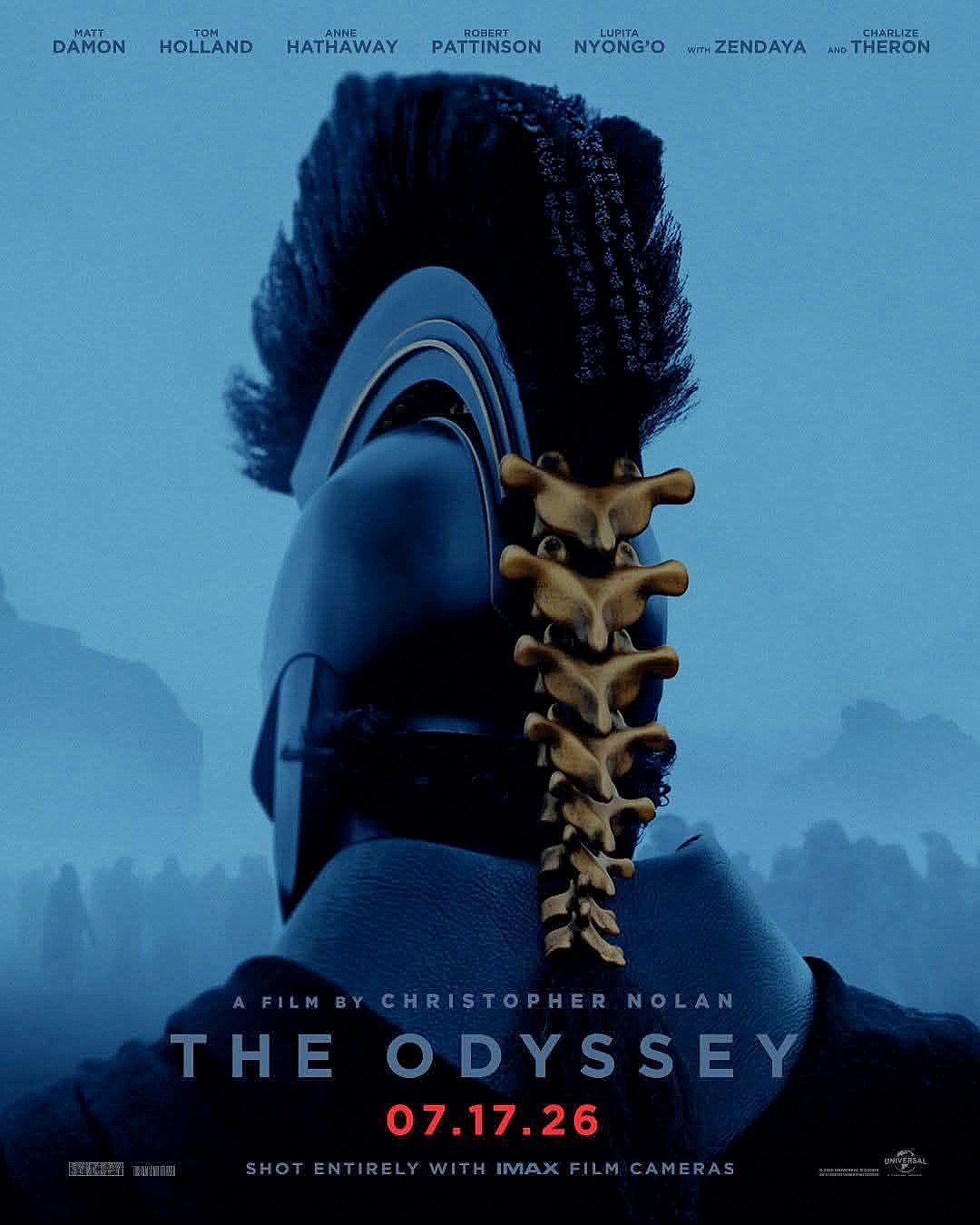
Christopher Nolan’s latest blockbuster is The Odyssey, an adaptation of Homer’s epic tale charting the long and arduous journey of Odysseus from the war in Troy to his wife and son in his kingdom, Ithaca. The famous British film director credits the English translation of The Odyssey by Emily Wilson as the inspiration for his screenplay and even uses her opening line in his film: “Tell me about a complicated man”. However, the translator is less than impressed with what she witnessed on the silver screen.
Why?
The translator feels it isn’t a true adaptation of her translation of Homer’s words. The film misses the mark in terms of “real” mythology. A key part of Greek myth is the sense of hospitality and food, or “xenia” is it is known in this case. Xenia involves a strict code of conduct whereby hosts have to welcome, bathe and provide food and wine to any guest begging their hospitality before they are asked about what business they have with the host.
Xenia is an integral part of The Odyssey, with dire consequences for Penelope’s guests and Cyclops when they breach their hosts’ hospitality. But without understanding the weight and importance of xenia within Greek myth, audiences are left wondering why some characters behave the way they do or end up in dire straits. Emily Wilson also mentions the food looking terrible, again, a shortfall in any adaptation of a Greek myth given the lavish banquets laid on by gods, warlords, kings and sorceresses. She cites the lack of character depth in the film, which is disappointing given the incredible personal journeys, emotions and turmoil that the main characters go through in the poem itself.
What is true to the translation?
The translator is true to the many female characters in Homer’s epic poem: Circe, Helen, Athena, Penelope, etc. Despite being a director who tends to have a great deal of male lead roles, Nolan has respected the source material, giving the goddesses and mortal women real pride of place in the adaptation. As you’d expect from the director behind Inception, the special effects and monsters are as thrilling as they are on the page, bringing the story to life and capturing the excitement of such an ancient poem. It also covers the key parts of the epic in its 3-hour runtime and takes care to give enough screentime to the events in Ithaca, as Penelope patiently awaits the return of Odysseus and has to deal with her own problems in the kingdom.
Why is the film important to the translation and language industry?
The film celebrates a legendary story that we can only read in translation, since it was written in ancient Greek, a language that differs to the Greek we speak today. Since the film was released, there has been a reported 70% increase in book sales of the Odyssey in the UK and Spotify has reported a rise in listening hours of over 752% in mid-July (around the film’s release date) in the French market. At the end of July, three different translations or adaptations of The Odyssey (including Emily Wilson’s and Stephen Fry’s versions) are in the top 30 bestselling books on Amazon. Despite the difference between ancient and modern Greek, Google Trends has reported a 5,000% surge in searches for “learn Greek” in July 2026 too.
Nolan’s film is putting translation and language back in the limelight, giving Greek and translated literature a showcase to attract a bigger audience. Emily Wilson may have hit the headlines because of her disappointment in the blockbuster adaptation of her work, but the impact the film has had on translated literature is as powerful and far-reaching as when Chocolat came out back in 2000 and had everyone rushing out to learn French. Just the fact that Christopher Nolan cites the translator and her work as his inspiration for making the film is stone-cold recognition of the art of translation in itself. Could a film about a Greek king draw battle lines with all the universities and colleges shutting down their language departments in the UK? Let’s hope so!
If you’d like to translate your book and grab the attention of the world’s biggest directors, contact us on info@activelanguages.co.uk and let’s get your story on the silver screen.